-
9AM - 5PM
-
9AM - 5PM


Menopause, Libido and Your Relationship: A Guide for You and Your Partner
Menopause libido changes are common and rarely about the two of you. What partners misread, and a letter to hand over. From counsellor Sharon Rosenbloom.

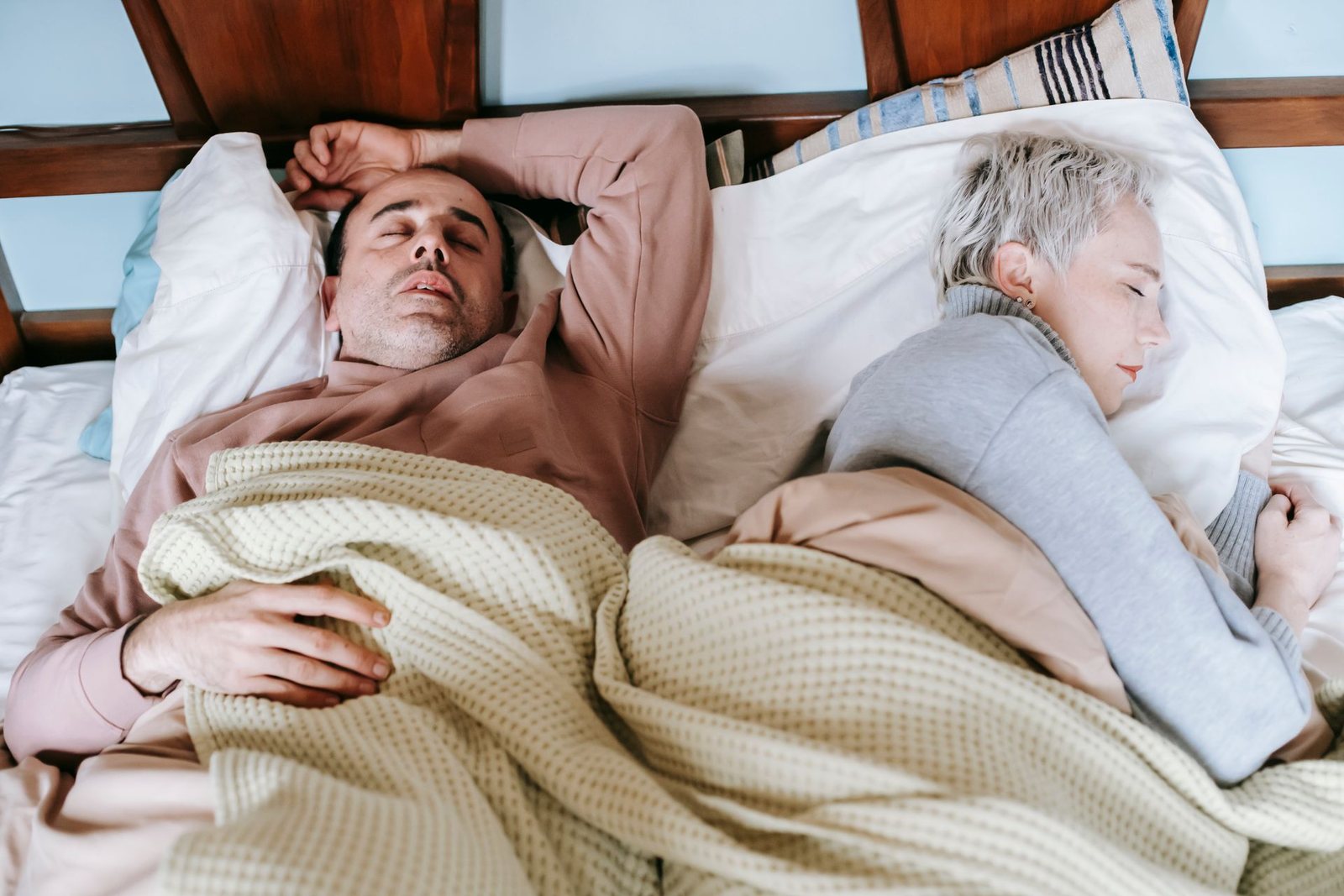
She’s lying with her back to him, wide awake, hoping he won’t reach over. He’s lying with his back to her, wide awake, having decided not to reach over again. Neither of them says a word, and in the morning they’ll talk about the bins.
If you’re the woman in that bed, you may have typed “menopause is ruining my relationship” into your phone and then deleted it. If you’re the partner, you may have wondered, with some shame, whether she still wants you at all.
I’m writing this to both of you, because in my counselling room this is almost never one person’s problem, even though it usually arrives as one.
Menopause affects libido because falling oestrogen, and often testosterone, lowers desire, slows arousal and can make sex uncomfortable, while exhaustion, low mood and feeling unlike yourself take the rest. Desire rarely disappears for good. For most couples the more damaging problem is what the silence around it does to the relationship.
Desire, arousal and the state of the relationship
Three different things get lumped together as “sex drive”, and separating them is where I start with couples.
Desire is wanting. The NHS lists reduced sex drive among the common symptoms of menopause, and many women describe it not as a decision but as an absence: the thought simply stops arriving. In midlife, desire is often responsive rather than spontaneous. It shows up after closeness starts, not before. If you’re waiting to feel like it first, you may wait a long time, and conclude something about your marriage that isn’t true.
Arousal is the body responding. Falling oestrogen slows it and can make it uncomfortable. When arousal hurts or fails, the mind learns to avoid it, and avoidance looks from the outside exactly like not wanting.
The state of the relationship is whether you feel safe, seen and liked enough to be vulnerable, and it decides whether a dip in desire becomes a distance between you. A woman who has spent two years raging, weeping and not sleeping (I’ve written separately about perimenopause anxiety and rage), then holding it together at work all day, often quietly believes she has become unlovable. A partner who has been snapped at and turned away often quietly believes he has become unwanted. So you have two people, each convinced they’re the one being rejected, and neither of them saying so.
What partners misread
I want to talk directly to the partner for a moment, because you are usually working from the wrong assumptions.
“She doesn’t fancy me any more.” Almost always, what’s gone is the spontaneous urge, not her feeling for you. You are not being compared to anyone, though she may well be comparing herself to her younger self.
“She’s angry with me.” Sometimes. More often she’s angry, full stop, and you are the nearest person. The rage of this transition is largely hormonal, and it isn’t evidence about the marriage.
“If I stop asking, I’ll stop being rejected.” Withdrawing feels like kindness, and she reads it as proof you’ve given up on her. One woman I worked with put it exactly: “He stopped reaching for me, and I decided that meant he’d noticed I was old.” He had stopped because he couldn’t bear being turned away again. Neither had said so for a year.
“It’s a phase, I’ll wait it out.” Symptoms do settle for most women, as I’ve set out in the stages of menopause. But a marriage doesn’t pause while you wait, and the couples who come through this well are the ones who kept talking while it was hard.
The physical side, in one paragraph
Lower oestrogen thins and dries the vaginal tissue, which can make sex sore, and that, more than anything about desire, is what turns “not tonight” into “not ever” for many women. Doctors group these changes under genitourinary syndrome of menopause, and unlike hot flushes they tend not to ease on their own. Local (vaginal) oestrogen, lubricants and moisturisers exist, and NICE guidance treats them as a routine conversation with your GP. I’m a counsellor, not a doctor, so I’ll leave the detail to the article on sex after menopause. But please, don’t put up with pain and call it a low libido.
What actually helps, for both of you
Separate the sex talk from the closeness talk. The conversation that changes things is almost never about sex. It’s “I miss you” and “I feel like I’ve disappeared”. Have it in the car or on a walk, side by side, not in bed.
Redefine what counts. Widen the definition of intimacy: a hand on the back while the kettle boils, lying down with no agenda. If every touch might be a request, she’ll flinch from all of them, so agree, out loud, that some touch is just touch.
Fix the sleep before you judge the marriage. A couple came to me convinced they had a sex problem. What they had was a woman who hadn’t slept properly in eighteen months. Sleep and fatigue reduce desire more reliably than anything else in this transition.
Take the hormonal part to the GP. HRT is a conversation with your doctor, and so is testosterone, which NICE guidance says can be considered for low sexual desire when HRT alone hasn’t helped. Go together if you can.
Get outside help, and get it early. Relate offers relationship and sex therapy across the UK, in person and online, and it works far better before a couple has spent years in silence. And if it’s the sense of self that’s gone, start with the previous article on who you are after menopause, because a woman who doesn’t recognise herself struggles to offer herself to anyone.
A letter to your partner
If you’d like to hand this to the person you love rather than find the words yourself, here they are.
I’ve been asked to write this for someone who finds it hard to say.
She still loves you. Her hormones have lowered her desire, made her body slower to respond and sometimes made sex hurt, and on top of that she is exhausted, often frightened and not always sure who she is right now. None of that is about you, and none of it is a judgement on you.
When she turns away, she is not rejecting you. She is protecting herself from something that feels like failure. When you stop reaching for her, she doesn’t feel relieved; she feels forgotten.
What she needs is not patience in silence. It’s touch that asks for nothing, curiosity instead of hurt, and the words “I miss you” said out loud. Go to the doctor with her if she’ll let you. When she is angry, try not to assume the anger is about you, because most of the time it isn’t.
This does pass, and what you do while it passes is what she’ll remember.
Frequently asked questions
Does menopause cause relationship issues?
It can, though usually indirectly. Menopause changes desire, sleep, mood and self-image, and if those changes go unspoken, both partners fill the silence with their own worst explanations. The NHS recognises reduced libido and mood changes as common symptoms. In my experience the hormones cause the dip in desire and the silence causes the damage to the relationship, and couples who name what’s happening early tend to come through closer than they went in.
Are affairs common during menopause?
There is no reliable figure, and I’d be wary of anyone who gives you one. What I see is not a rush to affairs but two people feeling unwanted at the same time, which makes anyone more open to attention from elsewhere, and that risk runs in both directions. What protects a marriage is not suspicion but honesty about the loneliness inside it before anyone looks outside it.
How many marriages break down because of menopause?
Honestly, nobody knows. There is no reliable UK figure, because divorce statistics don’t record menopause as a cause, and surveys on it are small or built for headlines. What is clear is that midlife is a common time for separation, and menopause tends to coincide with other pressures: children leaving, parents ageing. Menopause is rarely the whole reason a marriage ends, but it is often the point at which existing problems become too much to keep quiet about.
How does menopause affect a husband’s relationship?
Partners often describe confusion, rejection and walking on eggshells, and many take the loss of desire personally when it is largely hormonal. Some withdraw to protect themselves, which she reads as abandonment. Others push, which she reads as pressure. The partners who do best learn what’s happening, stay affectionate without expectation, and say how they feel rather than acting it out. Relate can help with that.
How can I increase my sex drive during menopause?
Start with the things that reduce desire: poor sleep, pain during sex, low mood and feeling unlike yourself. Treat pain first, with your GP’s help. Then build in closeness that isn’t a request, since desire in midlife is often responsive, arriving after intimacy begins rather than before. HRT, and in some cases testosterone, can be discussed with your GP. I’m a counsellor, not a doctor, so that conversation is one to have with them.
Will my wife ever want sex again after menopause?
Very likely, yes, though it may not return in the form it took at thirty. Once symptoms ease and the physical side is treated, many couples describe a better sex life in their later fifties than before. What decides it is less the hormones than whether you both stayed close while wanting was hard, because desire returns more easily to a relationship that has stayed warm in the meantime.
Sitting with couples who have drifted apart during menopause, and helping each of them hear what the other is not saying, is a large part of my menopause work. If you recognised your own relationship in this article, book a free discovery call here. Next in the series: Menopause at Work: Confidence, Mistakes and What to Say to Your Manager.
This article is part of The Menopause Journey, an eight-part series.
Previous: part 4 · Next: part 6