-
9AM - 5PM
-
9AM - 5PM


The Emotional Rollercoaster: Perimenopause Anxiety, Mood Swings and Rage
Why perimenopause causes anxiety, rage and mood swings, what the hormones are actually doing, and what genuinely helps. From therapist Sharon Rosenbloom.

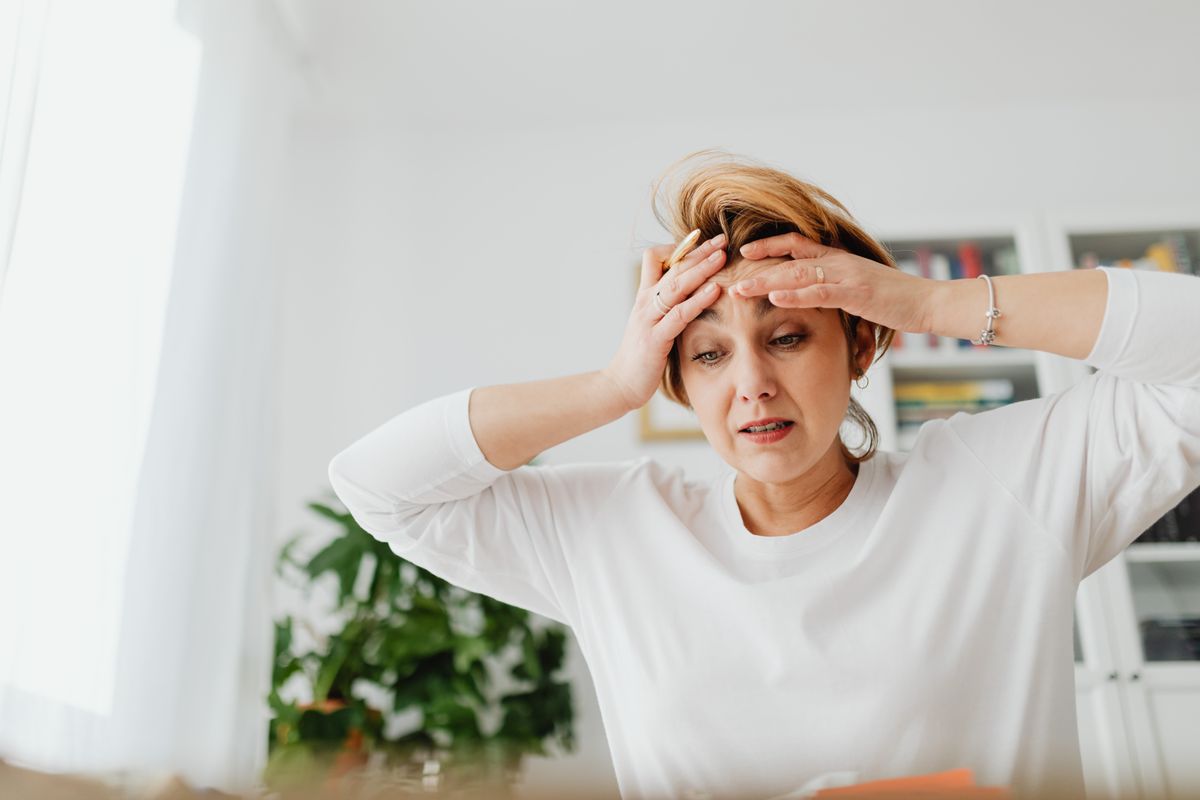
Of all the perimenopause symptoms women bring into my therapy room, the emotional ones carry the most shame. The hot flushes get talked about, even joked about. Nobody jokes about screaming at the people you love and then crying in the bathroom because you don't know who you're becoming.
So let me put the truth up front. Perimenopause anxiety, rage and mood swings are caused by fluctuating oestrogen and progesterone acting on the brain's mood systems, including serotonin and GABA. They are a recognised part of the transition, they are not a character failure, and they respond to the right support. If your emotions have become unrecognisable in your forties, there is a very good chance this is why.
What is actually happening in your brain
Oestrogen is not just a reproductive hormone. It interacts with serotonin and dopamine, the brain chemistry involved in mood, motivation and calm. Progesterone's breakdown products act on GABA receptors, the same calming system that sleep and anti-anxiety medications target. For thirty years your brain has run on reasonably predictable levels of both.
In perimenopause, those levels stop being predictable. They surge and crash, sometimes within the same week. Your brain chemistry is being asked to work on a supply that keeps changing, and the result is emotional weather you didn't order: anxiety with no obvious cause, tears at nothing, a fuse so short it frightens you.
Understanding this matters, because the story you tell yourself about a symptom changes the symptom. "I'm anxious because my hormone levels dropped this week" is frightening in a completely different way from "I'm losing my grip." The first story is workable. The second one feeds the anxiety it's trying to explain.
What perimenopause anxiety feels like
Women describe it to me in remarkably consistent ways. A low hum of dread with nothing attached to it. Waking at 4am with a racing heart. Suddenly doubting things they've done confidently for twenty years: driving on motorways, presenting at work, hosting family. Health anxiety that latches onto every new symptom. And for some women, full panic attacks, sometimes for the first time in their lives, which can be terrifying if you don't know they can start now.
If anxiety is new for you in your forties and arrived alongside changes to your sleep, cycle or temperature, hormones belong at the top of the suspect list.
The rage nobody warns you about
Rage deserves its own section, because it's the symptom women are least prepared for and feel worst about. An irritation that used to register as mild becomes fury. The sound of someone chewing. A question asked twice. And afterwards comes the guilt, which is often more corrosive than the anger itself.
Here is what I want you to hear, therapist to reader: the rage is information, not identity. Some of it is hormonal fuse-shortening, plainly. But in my experience it also tends to arrive carrying messages that have been waiting politely for years: about unshared load, unspoken resentments, needs postponed for everyone else's sake. Midlife rage is often the voice of things that need renegotiating. That doesn't excuse hurtful behaviour, but it does mean the answer isn't just to suppress it. It's to listen to it, calm the body carrying it, and act on what it's pointing at.
When it's perimenopause and when it's depression
This line matters and deserves care. Low mood, irritability and flat patches are common in perimenopause. But if your low mood is persistent rather than fluctuating, if you've lost interest in things you normally love, if you feel hopeless or worthless, or if you've had thoughts of harming yourself, please treat that as depression until a professional tells you otherwise, and see your GP now. Perimenopause can also reawaken depression in women who've had it before. You don't have to work out the cause yourself; that's what help is for. If you ever feel unsafe, call 999 or the Samaritans on 116 123, any hour, free.
What genuinely helps
Naming it. I keep repeating this because I watch it work every week. The moment "I'm going mad" becomes "this is perimenopause", the fear drops, and with it a surprising amount of the anxiety.
CBT, and not as a consolation prize. The NICE menopause guidance now specifically recommends cognitive behavioural therapy as an option for menopause-related mood symptoms, and there's decent evidence it helps with flushes and sleep too. CBT works on the loop where anxious thoughts amplify body symptoms, which amplify anxious thoughts. That loop is exactly what perimenopause sets spinning.
Steadying the body. Anxiety lives in the body as much as the mind. Regular movement, steady blood sugar (we'll cover this properly in the food article), cutting back alcohol and caffeine honestly rather than theoretically, and breathing or hypnotherapy-based relaxation work all lower the baseline arousal your emotions are riding on.
Talking, properly. To a partner or friend, so the people around you have the real explanation rather than the one they're guessing at. And to a therapist if the emotional load is heavy, or if what the rage is pointing at needs untangling. This is my daily work, and midlife is when many women do the deepest work of their lives.
Your GP. If mood symptoms are significantly affecting you, HRT is one of the options NICE says should be discussed for perimenopausal mood changes, alongside talking therapies. The article on HRT and GP conversations later in this series will help you prepare for that discussion.
Frequently asked questions
Can perimenopause cause anxiety attacks?
Yes. Fluctuating oestrogen affects the brain systems that regulate the stress response, and some women experience panic attacks for the first time during perimenopause. New panic symptoms are worth discussing with your GP both to rule other things out and to talk through options.
I'm experiencing anxiety in my 40s. What could be causing this?
New anxiety in your forties has several possible causes, but if it arrived alongside changes to your sleep, periods, temperature or concentration, perimenopause is a strong candidate. Thyroid issues and life stress can look similar, which is why a GP conversation, ideally with a symptom diary, is the sensible first step.
How long does perimenopause anxiety last?
It typically fluctuates with hormone swings rather than staying constant, often coming in waves with easier stretches between. For many women it eases as hormones settle after menopause. How long that takes varies, but it is not permanent, and support in the meantime makes a real difference.
How do I stop feeling anxious in perimenopause?
Start with the story (knowing it's hormonal), the body (movement, blood sugar, alcohol, breathwork) and the loop (CBT-based tools for the thought-symptom spiral). If anxiety is affecting your life, see your GP: NICE guidance supports both talking therapy and HRT as options. Working with a therapist who understands this transition helps you do all of it faster.
If your emotions have stopped feeling like yours, that is exactly the territory I work in. Book a free discovery call here. Next in the series: perimenopause, sleep and fatigue, and why you're so tired.
This article is part of The Perimenopause Journey, a nine-part series.
Previous: part 2 · Next: part 4