-
9AM - 5PM
-
9AM - 5PM


The Empty Nest and Menopause: When Two Losses Arrive at Once
Empty nest syndrome and menopause often arrive together: two griefs, one quiet house. How to mourn both. From counsellor Sharon Rosenbloom.

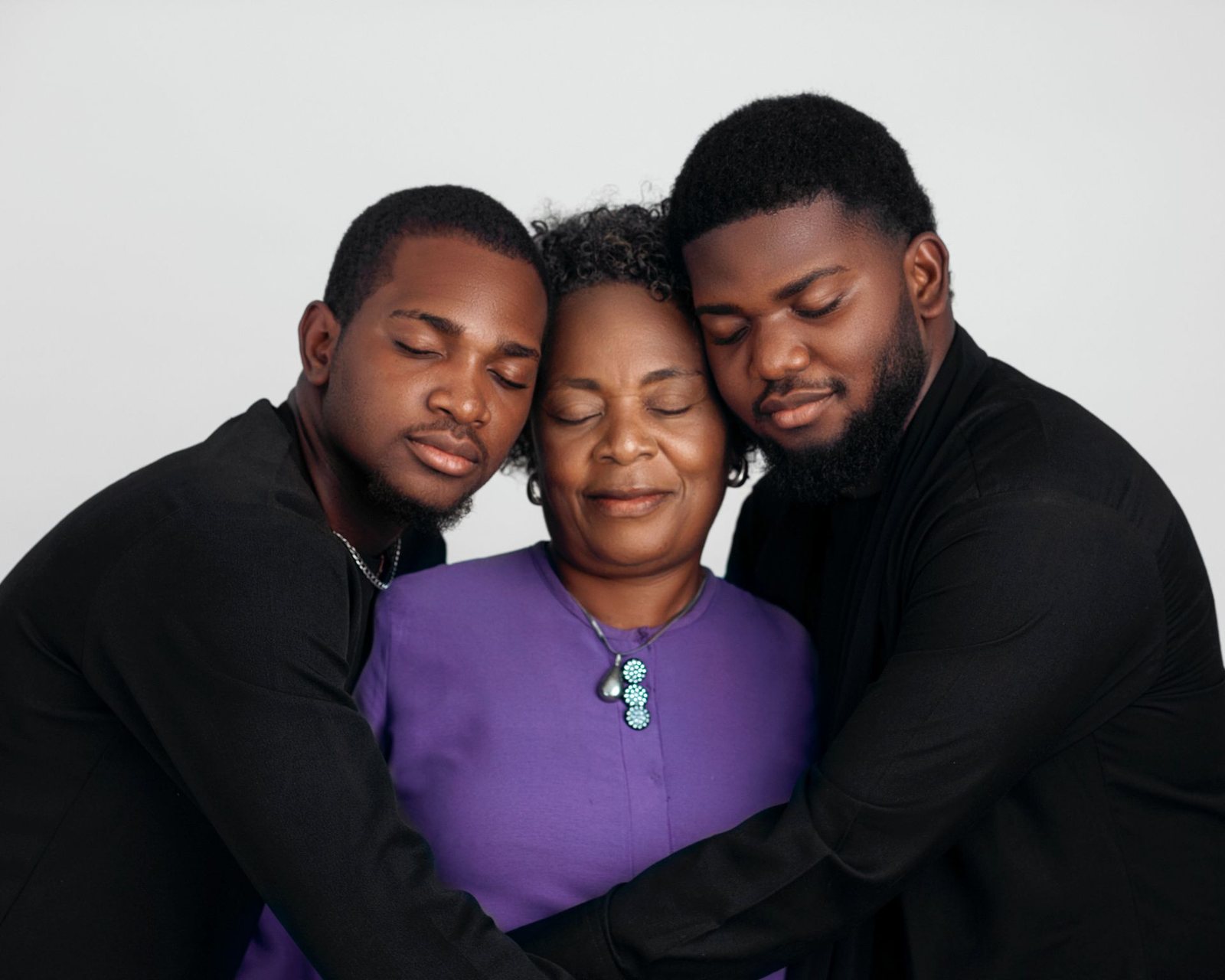
You drove home from the halls of residence with the passenger seat empty and the radio on so you didn’t have to sit in silence. You’d promised yourself you wouldn’t cry until the motorway. You made it as far as the car park.
Now the house is tidy in a way it hasn’t been for twenty years. Nobody shouts down the stairs. And you, who counted the days to this freedom on the hard weeks, are standing in a bedroom doorway at 11pm holding a jumper that smells of someone who no longer lives here.
Somewhere in the same few months your periods stopped, or the flushes started, or you looked in the mirror and didn’t recognise the woman looking back. You feel ridiculous for being so undone by things everyone says are normal. You are not ridiculous. You are grieving twice.
Empty nest syndrome is the grief, loneliness and loss of purpose many parents feel when their last child leaves home. It is not a medical diagnosis, but it is a real bereavement of a role. When it arrives alongside menopause, as it often does, two unacknowledged griefs have to be carried at the same time.
Two losses that nobody acknowledges
Grief researchers have a name for loss that isn’t socially recognised: disenfranchised grief. Kenneth Doka, who coined the term, described it as grief that can’t be openly acknowledged, publicly mourned or socially supported. Nobody sends a card when your daughter moves to Leeds, and nobody treats the end of your fertility as a loss worth mentioning either.
So both griefs get hidden. The empty nest becomes “I’m being silly, she’s only two hours away”. Menopause becomes “it’s just hormones”. Two real bereavements get processed as one vague, shameful low mood you can’t explain to anyone.
For many of the women I see there is a third loss already under way. This is the decade when parents start to fail. You drop a child at university on Saturday and drive your mother to a hospital appointment on Monday. When a woman tells me she can’t cope with her son leaving, we usually find the son leaving is simply the loss that finally had a name.
The stages of grief after the last child leaves
I’ve spent my working life with the 12 stages of grief, and the early stages look almost identical after the last child leaves home, if you know what you’re looking at.
Shock and numbness is the first fortnight. You are efficient. You strip the bed, you reorganise the freezer, you tell friends it’s fine, honestly, it’s fine. You keep busy because you haven’t yet taken in that something has ended.
Denial is the bedroom kept exactly as it was, the extra plate laid on autopilot, the four-pint milk still going in the trolley. It is also the frantic replacement activity, anything that keeps you out of that doorway.
Anger and bargaining arrive together, as they usually do. Anger at a child who doesn’t text back, at a partner who seems unbothered, at a body that has chosen this exact moment to stop sleeping. Bargaining sounds like “if I’d been a better mother she’d call more” or “once the HRT is sorted I’ll feel like myself again”. From the inside, menopausal rage and empty-nest anger feel much the same, and in my experience both are usually grief that hasn’t yet been allowed to become sadness.
Sadness is the supermarket aisle where you pick up their cereal and put it back. It is the stage women fight hardest, because it looks like weakness, when in fact it is the most honest part of the whole process.
A woman I worked with described sitting on her son’s bed every evening for a month, and was ashamed of it. I asked what she would say to a friend who sat by a grave every evening for a month. She said she’d tell her that was normal. So is this.
The later stages, reconstruction, meaning, and eventually growth, do come. But they come to women who let the early stages be what they are, not to those who try to skip them.
What the empty nest does to a marriage
For twenty years the two of you have been co-managing lifts, dinners and parents’ evenings. Then that work stops, and two people who are very good at running a household together find themselves across a kitchen table with nothing to organise and a silence neither of them chose.
Menopause is happening in the same house at the same time. One of you is sleeping badly, running hot, feeling changed, and possibly further from wanting to be touched than she has ever been. The other may be reading the whole thing as rejection. I’ve written separately about menopause, libido and your relationship, so I’ll only say here that the empty nest doesn’t create the distance between you; it removes the busyness that was covering it up.
That can be a crisis. It can also be the first honest conversation in a decade. What I see work is saying it out loud: “I don’t know who we are without them in the house, and I’d like to find out.” If that conversation keeps stalling, Relate exists for exactly this.
When “mother” stops being a full-time job
For twenty-odd years, whatever else you were, you were needed in a daily, physical, non-negotiable way. It is one of the most complete identities a human being can hold, and it ends on a Saturday in September with no ceremony at all.
Menopause takes the other half of the same identity in the same season. Your fertility ends just as the children leave, and I don’t think it is a coincidence that women describe both experiences with the same word: invisible.
I’ve written about what happens to who you are when menopause ends, and if you are still in the transition rather than through it, the grief of perimenopause is the place to start. Where you sit on the stages of menopause matters too, because the empty nest tends to land in late perimenopause or the first postmenopausal years, when your reserves are lowest. What has ended is a role, not a person, and you are allowed to mourn that role before anyone expects you to be grateful for the freedom.
What actually helps
Name both losses separately. “I feel awful” can’t be mourned. “I am grieving my daughter’s childhood ending, and I am grieving the body that made her” can. Say it to someone.
Keep the room, but not as a shrine. Change one small thing within the first month: the bedding, a shelf. It keeps the room part of the house rather than sealed off, and that matters more than it sounds.
Let contact be theirs to set. The hardest discipline of this stage is not messaging three times a day. Children who are given room to leave usually stay in closer touch, not less.
Watch the low mood. Sadness that lifts and returns is grief. Sadness that flattens everything for weeks with no relief may be depression, and the menopause years are a time when women are more vulnerable to it. That is a conversation with your GP. I’m a counsellor, not a doctor.
Get witnessed. A grief circle, a counsellor, one friend a stage ahead of you. Disenfranchised grief loses most of its power the moment somebody says “of course you feel like that”. If work is where you’re struggling most, menopause at work covers that side of the same period, and what a menopause coach does comes next.
Frequently asked questions
What are the different phases of empty nest syndrome?
Empty nest syndrome isn’t a clinical diagnosis, so there are no official phases, but it tends to follow the shape of grief: shock and numbness in the first weeks, then a restless phase of over-scheduling or keeping everything unchanged, then anger and sadness, and finally a rebuilding phase in which you reshape your days and identity around a quieter home. Most people move back and forth between phases rather than through them in order.
What are the treatment options for severe empty nest syndrome?
There is no specific medical treatment because it isn’t a medical condition, but severe or persistent symptoms deserve proper support. Talking therapy or grief counselling helps most, because the work is mourning a role. Couples counselling, through Relate or a private therapist, helps when the marriage is struggling. If low mood is constant for more than a few weeks, see your GP, because depression can hide inside empty nest syndrome, especially around menopause.
Does menopause mean no more eggs left?
Effectively, yes. Women are born with all the eggs they will ever have and the supply declines across a lifetime. By menopause the ovaries have so few follicles left that they stop releasing eggs and stop responding to the hormones that used to trigger ovulation. A few may technically remain but no longer mature or release, so natural pregnancy isn’t possible. The end of fertility is a real loss for many women, which is why it belongs in a conversation about grief.
Grief is my life’s work, and the double grief of the empty nest and menopause is something I work through with women every week. If this article named something you’re carrying, book a free discovery call here. Next in the series: What is a menopause coach, and what do they do that a GP doesn’t?
This article is part of The Menopause Journey, an eight-part series.
Previous: part 6 · Next: part 8