-
9AM - 5PM
-
9AM - 5PM


Sex After Menopause: Dryness, Pain, Desire and the Conversation Nobody Starts
Sex after menopause: why dryness and pain happen, what GSM means, and the GP conversation about vaginal oestrogen. From counsellor Sharon Rosenbloom.

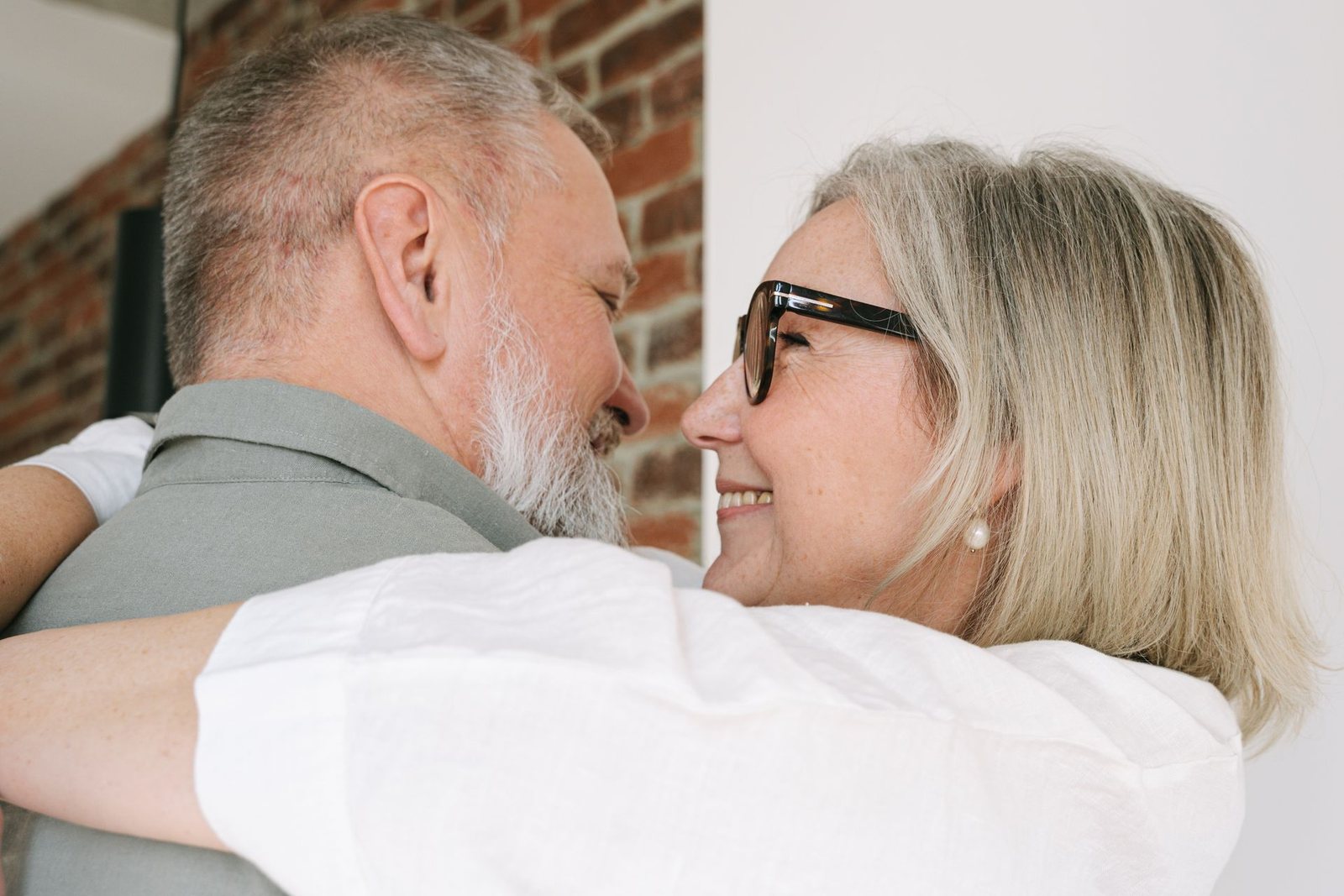
You used to reach for him without thinking about it. Now you find reasons not to: the light is too bright, it is too late, you are too tired. None of that is quite a lie, but underneath it sits the real reason, the one you have not said aloud even to yourself. Last time it hurt, and some part of you has been arranging the evening so it cannot happen again.
Women tell me this in the counselling room far more often than they tell their GP, and rarely in as many words. They describe the tiredness, the timing, the mood, and only once we have talked for a while does the actual sentence arrive: sex hurts now, and I do not understand why, and I am too embarrassed to ask.
Sex after menopause changes for most women because falling oestrogen thins and dries the vaginal tissue, a change with a proper medical name: genitourinary syndrome of menopause, or GSM. It commonly causes dryness, pain during sex and urinary symptoms, and unlike a hot flush, it tends to worsen rather than fade untreated.
This sits inside the wider picture of what postmenopause brings at different ages, which I have mapped fully in postmenopause: what it means and what to expect at 50, 55, 60 and beyond. Changes in comfort and desire are among the most common of those shifts, among the most treatable, and among the least talked about.
Genitourinary syndrome of menopause, named plainly
Most women have never heard the term GSM, even though many postmenopausal women notice some degree of it. Doctors used to call it vaginal atrophy, a word few women want applied to their own body, and the more accurate name has largely replaced it. GSM covers a cluster of changes: dryness, thinning and reduced elasticity of the vaginal walls, irritation or burning, pain during sex, and a bladder lining that is more easily irritated, which is why urinary symptoms and UTIs after menopause often sit in the same conversation as dryness.
GSM is common, and it is progressive. Left untreated, it tends to continue rather than settle, because the tissue is responding to a hormone level that has permanently changed. That is worth saying clearly, because so many women wait for it to pass the way a flush eventually does. This one usually does not, on its own.
I am a counsellor, not a doctor, and none of this is medical advice. What I can offer is the plain naming of something many women are living with unnamed, and the confidence to raise it with someone who can treat it.
The shame and avoidance cycle
Here is the pattern I see most often, and it has a shape worth recognising, because naming it is most of the way to breaking it.
Sex hurts, once or twice. Rather than mention it, a woman quietly starts avoiding the situations where it might happen again: later bedtimes, more tiredness, less affection that might lead anywhere. Avoidance reduces blood flow and regular use of the tissue, which in GSM tends to make dryness and tightness worse, not better. So the next attempt hurts more, which deepens the avoidance, which deepens the problem. Neither partner has done anything wrong, and both can end up living inside a cycle that nobody has named.
A woman I worked with had not been examined by anyone in three years, out of a mixture of embarrassment and the assumption that this was simply what happened to a woman her age. She had also stopped undressing in front of her husband of thirty years. The turning point was not a treatment; it was a single rehearsed sentence to her GP, “sex has become painful and I think it is connected to menopause,” which she practised with me twice before she said it aloud.
The shame sits on both sides of this. Partners often read withdrawal as rejection rather than pain, and stay quiet about that too, so two people can end up managing the same avoidance for entirely different, unspoken reasons.
Moisturisers and lubricants: two different jobs
These two get confused constantly, and using only one when you need both is a common reason women feel that nothing has helped.
- Vaginal moisturisers are used regularly, every few days, whether or not sex is happening. They rehydrate the tissue over time and are the more useful first step for day-to-day dryness, itching or discomfort.
- Lubricants are used at the time, to reduce friction during sex itself. They ease that specific moment but do nothing for the underlying dryness afterwards.
- Water-based or silicone-based versions of both are generally preferred over oil-based products, particularly alongside condoms, which oil can weaken.
Many women try a lubricant once, find it is not enough on its own, and conclude nothing works. Used together, a regular moisturiser plus a lubricant at the time gets much closer to the underlying problem, though neither replaces a proper conversation with your GP where a GSM diagnosis is confirmed.
Local vaginal oestrogen: a GP conversation
This is the point at which I hand the conversation to your doctor, because it belongs there.
Local vaginal oestrogen, as a cream, pessary or ring, delivers a low dose directly to the tissue rather than around the whole body, and both the NHS and the British Menopause Society treat it as a standard, well-established option for GSM. It is generally considered suitable for most women, including many for whom other forms of HRT are not, and including women well into their sixties, seventies and beyond, because so little of it reaches the rest of the body. Whether it is right for you, at what dose and for how long, is a decision for you and your GP, made with your own history in view.
A woman I worked with had put off asking for years, because she associated all hormone treatment with the same risk, after an aunt’s breast cancer. Her GP was able to talk her through how local oestrogen differs from oestrogen taken for hot flushes, and what her own history meant for the decision. I could not have had that conversation with her; I could only encourage her to start it. The preparation that helps any GP conversation about hormones, bringing your history and knowing what to ask, is the same whichever stage of the transition you are in, and I have set it out fully in HRT, your GP and the support in between.
If a GP treats the symptoms as simply part of ageing, it is entirely reasonable to ask specifically about local vaginal oestrogen by name, or to ask for a GP with a particular interest in menopause.
Desire, and what this article does not cover
Pain and low desire are not the same problem, though they often arrive tangled together.
Physical dryness and pain reduce desire in an obvious way: it is hard to want something that has recently hurt. But desire also falls for reasons that have nothing to do with the vaginal tissue, and untangling the two matters, so I will name the boundary rather than cross it: what a falling libido does to a partnership, and what to say to a partner who has misread the silence, is its own subject, covered fully in menopause, libido and your relationship. Treat the physical cause where one exists, and do not assume low desire is purely physical just because GSM is also present.
GSM is one way postmenopause reshapes the body; it is far from the only one, and bones, heart and weight shift too, often more quietly and with less conversation around them than this topic gets even now.
Frequently asked questions
Why do I have no interest in sex after menopause?
Falling oestrogen and testosterone can lower desire directly, and pain from vaginal dryness teaches the body to associate sex with discomfort rather than pleasure, which lowers interest further. Poor sleep, low mood and relationship strain often compound it. If dryness or pain is part of the picture, treating that is worth doing regardless, and if low desire persists on its own, it is worth raising with your GP.
Does a woman still get wet after menopause?
Natural lubrication reduces for most women after menopause, because oestrogen keeps the vaginal tissue supple and well supplied with blood, and that support falls away. It does not disappear entirely for everyone, and arousal still helps, but relying on natural lubrication alone becomes less realistic. A regular vaginal moisturiser plus a lubricant during sex closes most of the gap.
Can drinking water help vaginal dryness?
General hydration supports the whole body, but plain water on its own will not meaningfully treat vaginal dryness after menopause, because the cause is hormonal tissue change, not fluid levels. Staying well hydrated is sensible for general health regardless, though the treatments that actually help are vaginal moisturisers, lubricants for sex, and, where appropriate, local vaginal oestrogen agreed with your GP.
How to deal with painful sex after menopause?
Start with a regular vaginal moisturiser rather than only a lubricant on the day, since ongoing dryness needs ongoing treatment. See your GP if pain continues, since local vaginal oestrogen treats the underlying cause for most women and is considered suitable even later in life. Go slowly, use more lubricant than feels necessary, and say out loud if something hurts rather than pushing through it.
I have sat with more women than I can count who believed painful sex was simply the price of getting older, and watched what changes once they say the sentence out loud to someone who can help. If this is the conversation you have been avoiding, book a free discovery call here. Next in the series: Bones, Heart and Weight After Menopause: The Habits That Matter Now.
This article is part of Life After Menopause, a six-part series.
Previous: part 2 · Next: part 4