-
9AM - 5PM
-
9AM - 5PM


Bones, Heart and Weight After Menopause: The Habits That Matter Now
Bones, heart and weight after menopause: the habits that matter now oestrogen's protection is gone. From counsellor Sharon Rosenbloom.

You catch your foot on a kerb you have stepped over a hundred times, and for a fraction of a second before your hand shoots out, a thought arrives from nowhere: would that have broken something?
Ten years ago the same stumble would not have produced a thought at all. Now it often arrives alongside two other things nobody quite warned you about: a waistband that sits differently no matter what you eat, and someone you know, a mother, an aunt, a friend, who broke a hip or a wrist and was never quite as steady on her feet again.
None of that is your imagination, and none of it is a verdict on how well you have looked after yourself. It is oestrogen, doing considerably less than it used to.
Bones, heart and weight change after menopause because oestrogen, which protected all three through your fertile years, has now largely gone for good. Bone loss speeds up, cardiovascular risk rises, and fat tends to settle around the middle rather than the hips. None of this is fixed doom. The habits that matter now are strength and impact exercise, protein, calcium and vitamin D, less alcohol and sugar, and two NHS checks genuinely worth booking.
What oestrogen was quietly doing for you
Oestrogen is not only a reproductive hormone. For decades it has been helping regulate bone turnover, keeping blood vessels supple, favouring a healthier balance of cholesterol, and encouraging your body to store fat lower down rather than around your organs. Once you are the far side of the twelve months I wrote about in how long does menopause last, that background support largely stops, and each of those three systems is left to manage without it.
The Royal Osteoporosis Society estimates that around one in two women over 50 will break a bone, mostly because of osteoporosis, and bone loss is fastest in the years immediately around menopause. The British Heart Foundation points out that heart and circulatory disease kills roughly twice as many women in the UK as breast cancer, yet women still tend to think of it as a man’s disease. And the shift towards weight around the middle, rather than a change in willpower, is a documented hormonal pattern, not a personal failing.
I am a counsellor and naturopath, not a doctor, and none of this is a diagnosis of you. It is context for a conversation that is worth having with your GP, particularly if any of it runs in your family.
Strength and impact exercise: the biggest lever you have
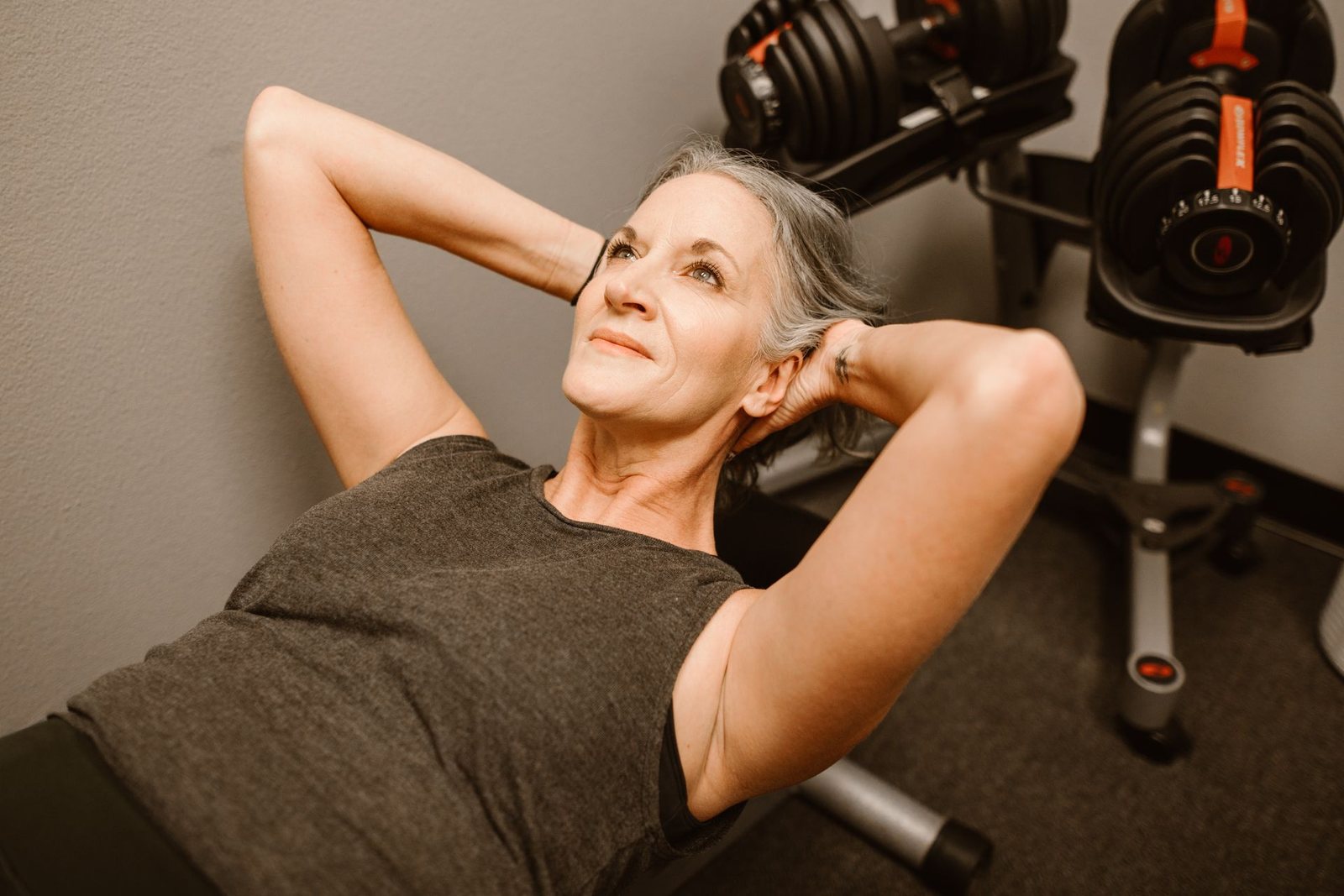
If I could get every woman in postmenopause to change one habit, it would be this one. Bone responds to load, and muscle is genuinely protective for both bones and metabolism, yet it is the first thing this life stage quietly erodes if you let it.
NHS guidance for adults recommends strengthening activities on at least two days a week, working the major muscle groups: legs, hips, back, chest, shoulders and arms. That can be weights, resistance bands, bodyweight work or a class, whatever you will actually keep doing. Alongside that, some impact through your feet and legs, brisk walking, dancing, stair climbing, jogging if your joints allow it, gives bone an additional signal to stay dense rather than assuming it is no longer needed.
A woman I worked with had spent thirty years doing gentle cardio and nothing else, because that was what “exercise for women” had always meant to her. She started two short strength sessions a week, reluctantly, mostly because I would not stop mentioning it. Eighteen months later her GP commented, unprompted, on how much stronger she seemed. She told me the real change was smaller and more private: she no longer thought twice before carrying her own suitcase up a flight of stairs.
Eating for the body you have now
Protein matters more here than at any earlier stage of your life, because muscle is easier to lose in postmenopause and harder to rebuild once it has gone. Most of the midlife women I see are eating far less of it than would serve them, especially at breakfast. Eggs, fish, chicken, Greek yoghurt, beans, lentils and tofu, spread across the day rather than saved for dinner, is the simplest version of the advice.
Calcium and vitamin D are worth being specific about, because the NHS is specific about them. The NHS states that adults need 700mg of calcium a day, available from dairy, tinned fish eaten with the bones, leafy greens and fortified foods, and that everyone should consider a daily supplement of 10 micrograms of vitamin D during autumn and winter, since UK sunlight is not strong enough to make enough of it the rest of the year. Beyond those two established figures I will not put numbers on anything, because I would rather leave a fact out than guess at one.
Sugar deserves an honest mention, because it works against you twice over. It drives the blood sugar swings that make weight around the middle harder to shift, and for many women in this stage of life it has become the reliable comfort that stress and poor sleep reach for. I have written at length about why that pull is so strong in Sugar Dependency and Your Brain and about spotting sugar where you do not expect it in how to identify hidden sugars in your diet, and the eating pattern that helps most in this decade is laid out fully in food, sugar, weight and hormones, which applies just as much now as it did in perimenopause.
Alcohol, honestly
Alcohol works against all three areas at once. It disrupts the deep sleep your body needs to regulate appetite and repair itself, it raises blood pressure over time, and it interferes with calcium absorption, which matters more now that bone density is already under pressure. None of this means never. It means noticing the honest dose, and noticing whether the evening glass has quietly become the evening habit that steadies a difficult day, which is a different thing to manage than simply enjoying a drink.
The two NHS checks worth booking
The NHS Health Check is offered free to adults aged 40 to 74 in England, roughly every five years, and covers blood pressure, cholesterol, blood sugar and your broader cardiovascular risk. It takes half an hour and it exists precisely because most heart risk builds up silently for years before anything feels wrong. If you have not had one, or cannot remember when you last did, your GP surgery can tell you.
A bone density scan, usually called a DEXA scan, is not offered routinely to every woman. Your GP will typically use a risk calculator, weighing things such as family history, early menopause, low body weight, smoking or long-term steroid use, to decide whether a scan is worth arranging. If you have any of those risk factors and nobody has assessed your bone health, ask your GP whether a scan is right for you. If they do not think it is needed yet, that is a clinical judgement worth trusting rather than second-guessing from an article.
Frequently asked questions
Is it common to get osteoporosis after menopause?
Yes. The years around and after menopause are when bone density falls fastest, because oestrogen had been slowing bone loss throughout your fertile years. The Royal Osteoporosis Society estimates that around one in two women over 50 will break a bone, mostly due to osteoporosis, which is why the habits in this article, along with your GP’s judgement on scanning, matter as much as they do.
How to regain bone density after menopause?
Strength training and weight-bearing impact exercise are the most evidence-backed habits, alongside adequate protein, calcium and vitamin D. Some density recovery is possible for certain women, particularly with medical treatment where osteoporosis is diagnosed, but the honest expectation is slowing loss and building strength around the bone you have, rather than reliably restoring what has already gone. Your GP is the right person to discuss treatment options with.
Can I reverse osteoporosis?
Not fully, in most cases, once significant bone loss has occurred. What is realistic, and genuinely worthwhile, is slowing further loss, strengthening the muscle that supports and protects your bones, and reducing your fracture risk, sometimes with medication your GP or a specialist prescribes. Anyone promising you a full reversal through diet or supplements alone is overstating what the evidence supports.
Why do I gain weight around my middle after menopause?
Falling oestrogen shifts where your body stores fat, moving it from hips and thighs towards the abdomen, while a natural loss of muscle slows your metabolism. It is a documented hormonal pattern, not a sign you are doing something wrong. Protein, strength training, sleep and moderating alcohol make the most difference, and they work far better than the crash diets many women reach for first.
Helping women build habits that hold, long after the initial motivation fades, is exactly the work I do in my therapy room. Book a free discovery call here. Next in the series: Low Mood, Loneliness and Depression After Menopause.
This article is part of Life After Menopause, a six-part series.
Previous: part 3 · Next: part 5